Energy-efficient window coverings for Edmonton winters
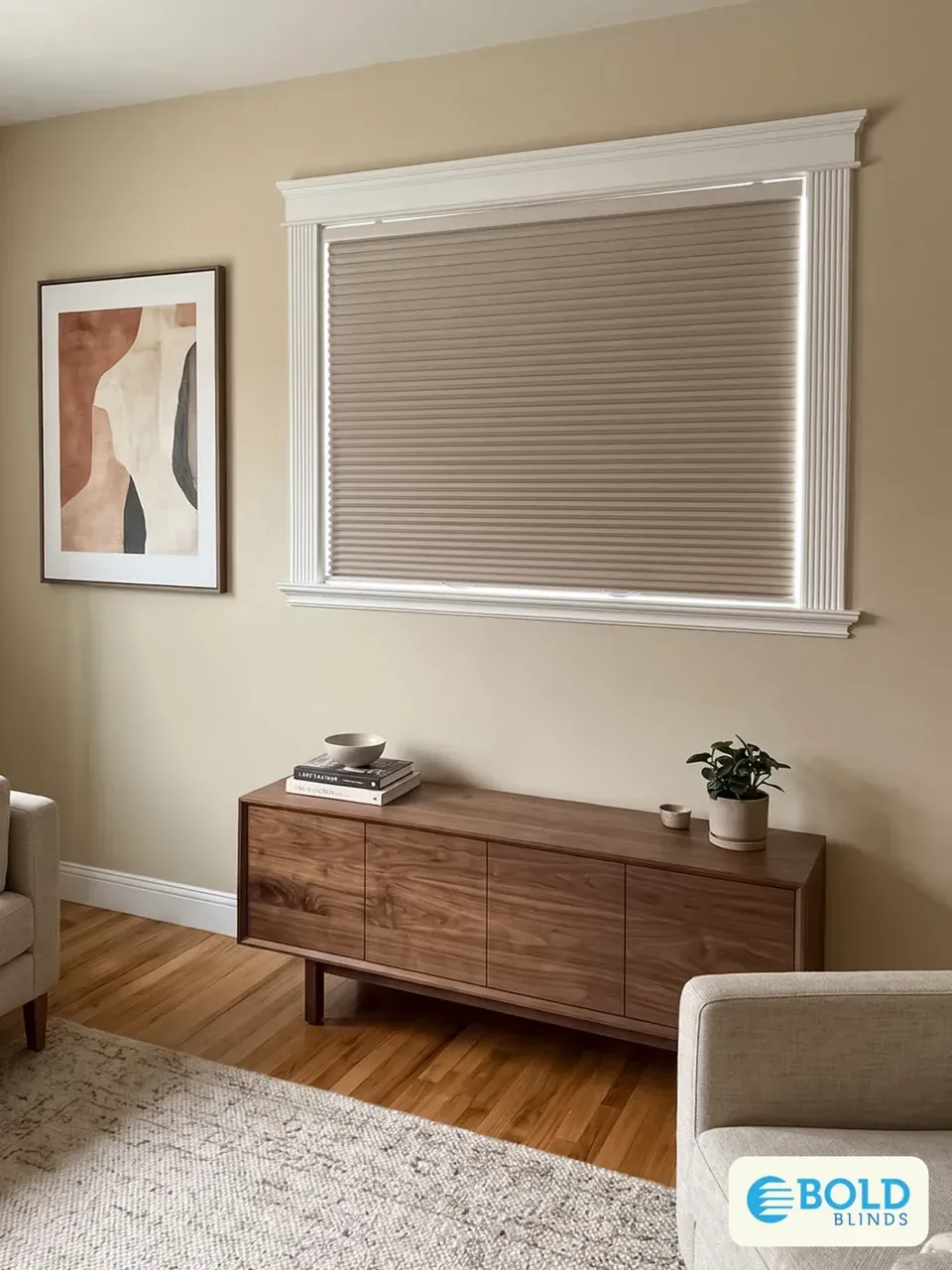
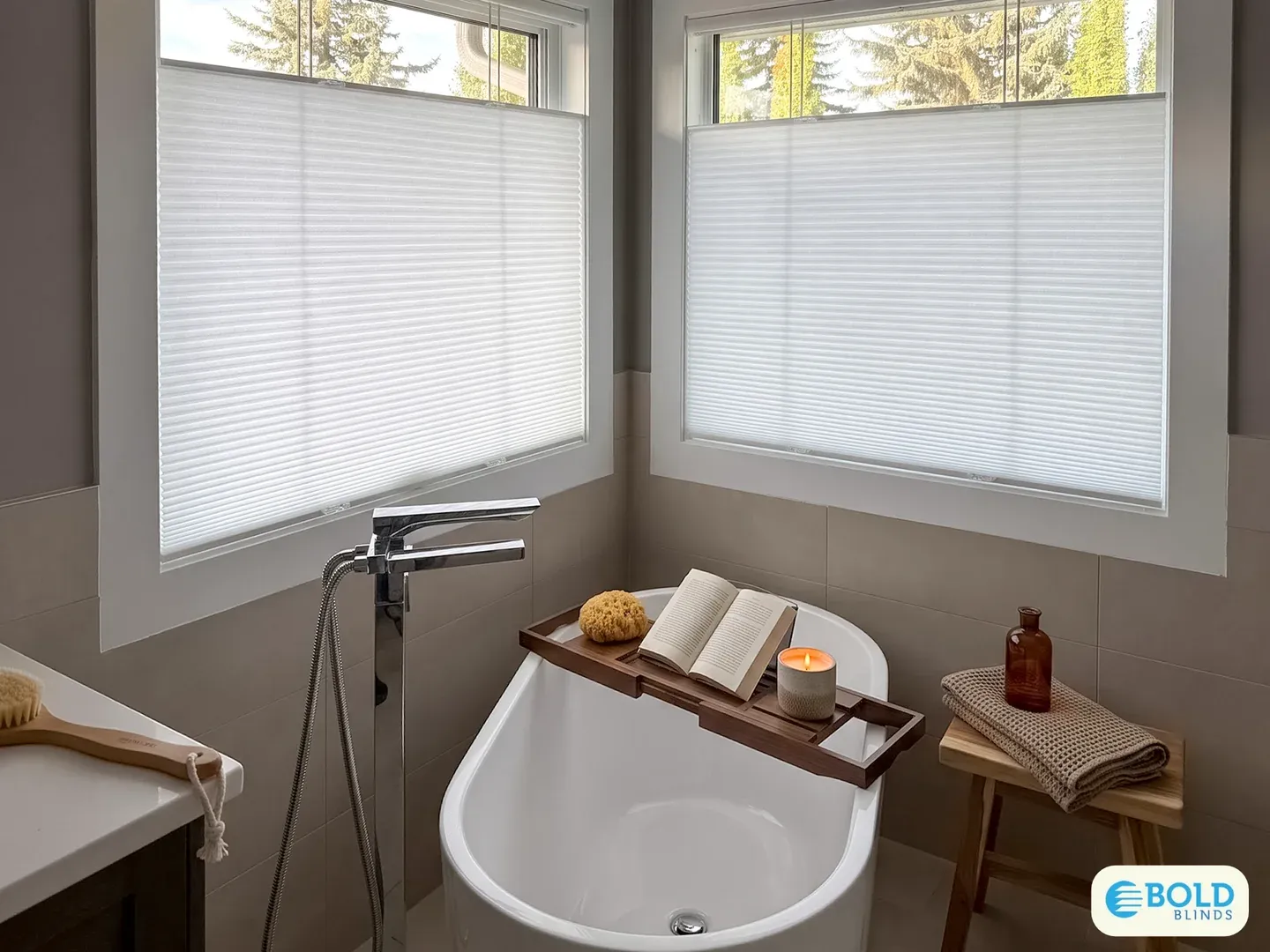
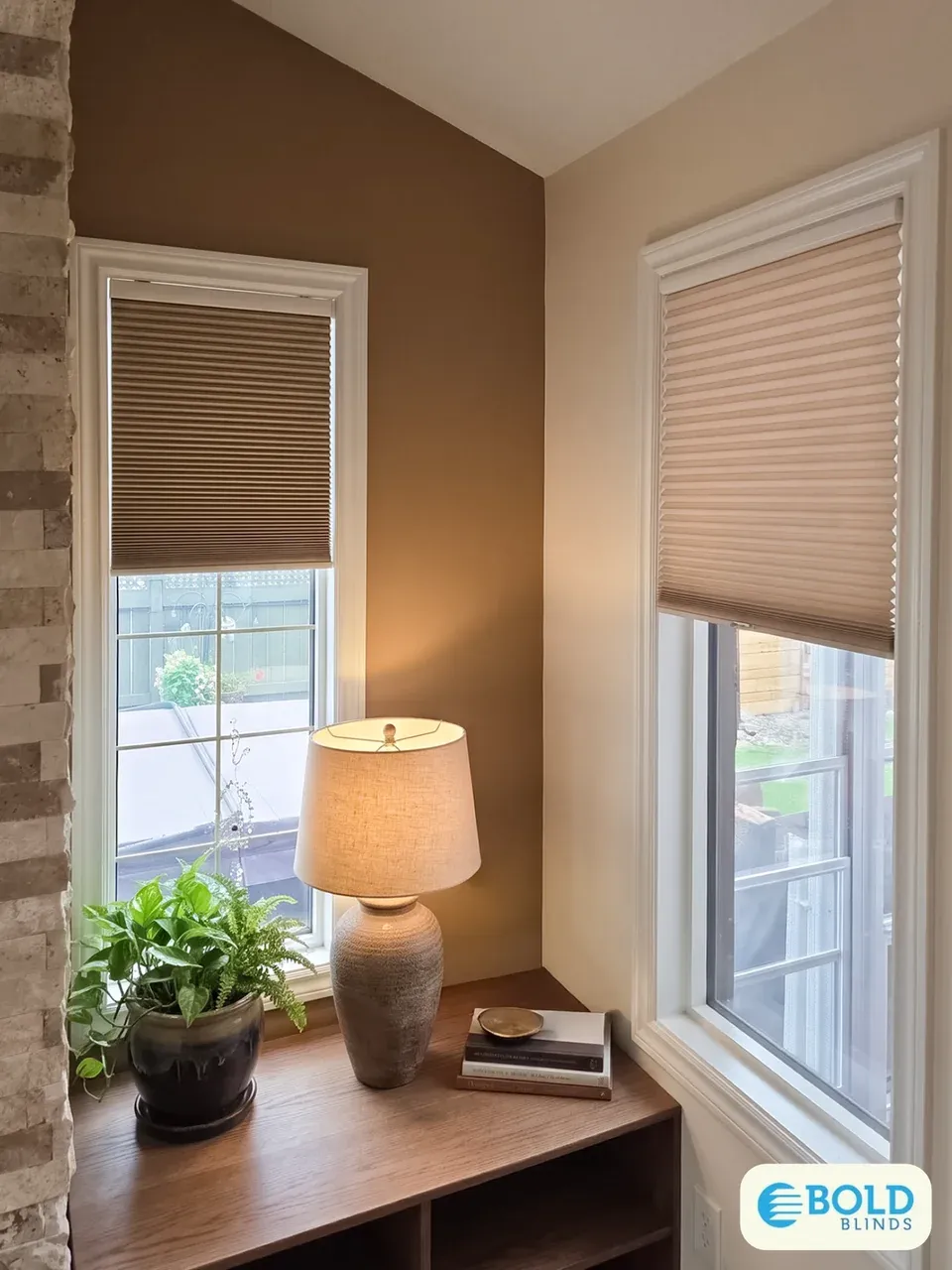
The most energy-efficient window coverings for an Edmonton winter are cellular (honeycomb) shades. Their cells trap a layer of still air against the cold glass, a bit like a down jacket for your window, so the room holds its heat and the chill near the glass eases off.
Proudly Canadian. We make every blind to measure in our Edmonton facility 🇨🇦 and install it with our own team. This guide is what we tell homeowners who ask how to keep a cold room warmer.
How much heat do windows lose in winter?
Windows are usually the weakest part of a home’s shell. Natural Resources Canada estimates that windows, doors and skylights can account for up to 35% of a house’s heat loss.
Cold glass also makes a room feel colder than the thermostat says. Your body gives off heat to cold surfaces nearby, so sitting beside a big window in January feels chilly even when the air is warm. That is the heat loss a window covering can help with: Natural Resources Canada notes that curtains and blinds can reduce radiant heat loss from windows during the heating season.
In Edmonton the heating season runs roughly October to April, and in late December there are only about seven and a half hours of daylight. The long nights are when windows lose the most heat, and when a closed shade does the most good.
Which window coverings insulate best?
Cellular (honeycomb) shades. They are the one blind built to insulate: each cell holds still air, and still air is what slows heat moving out through the glass. When people ask for insulated or thermal blinds, cellular shades are usually what they mean. Blinds with slats or vanes have gaps between them, so they do far less.
Here is how the blinds we make compare on a cold window:
| Window covering | How it holds heat | Best use in winter |
|---|---|---|
| Honeycomb (cellular) shades | Each cell holds a pocket of still air, with another layer between the shade and the glass. Double cell holds two layers of cells | Cold, north-facing and large windows, and bedrooms |
| Zebra blinds | Two layers of fabric with a small pocket of air between them when closed | Living areas where you also want daytime light control |
| Roman shades with a lining | Folded fabric plus a lining layer | Bedrooms and living rooms where you want a soft look |
| Roller blinds, including blackout | One layer of fabric. Blackout fabric is denser, but still one layer | Rooms where light and privacy matter more than warmth |
| Vertical blinds | Vanes with gaps between them. They take the edge off a cold patio door | Patio doors and wide windows |
| Faux wood blinds | Slats with gaps between them, so very little insulation | Look and light control, not warmth |
| Solar shades | An open-weave screen made for summer sun | South- and west-facing windows in summer |
Honeycomb shades come in single cell and double cell. Our honeycomb blinds page explains the difference and when each makes sense.
How do you get the most warmth from your blinds?
A shade only holds heat in when it is closed and sits close to the glass. Four habits make the biggest difference:
- Close them in the evening. In late December, Edmonton nights last more than 16 hours, and that is when windows lose the most heat. Natural Resources Canada advises closing curtains and blinds in the evening to keep heat from escaping. A shade left open overnight isn’t doing anything.
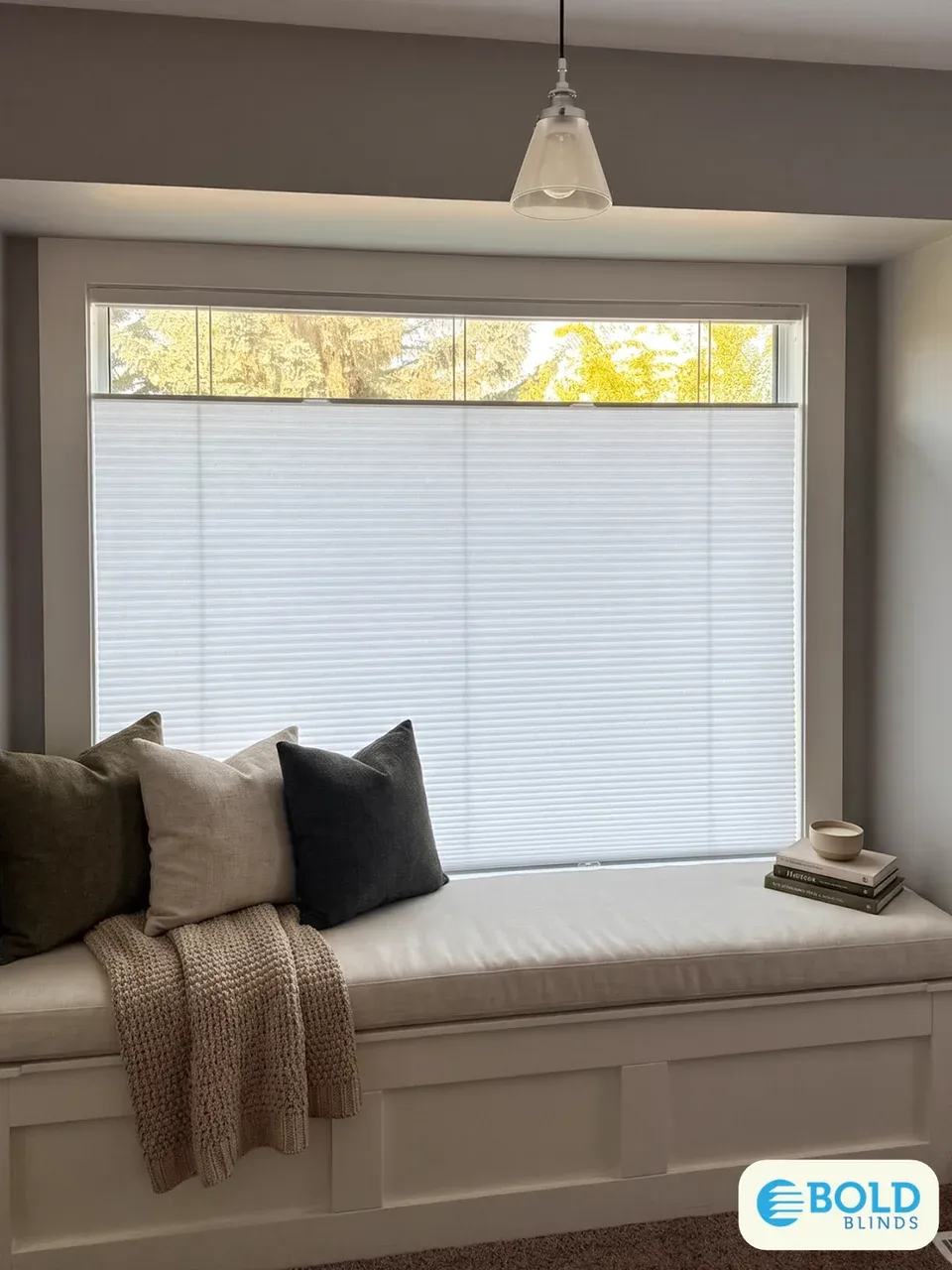
- Open them in the morning. Low winter sun through south-facing glass warms a room for free, so raise those shades on clear days and lower them again when the sun goes down. A top-down shade lets the light in over the top while the bottom stays closed for privacy.
- Get the fit right. Warm air that slips around the sides of a blind reaches the cold glass anyway. A shade made to measure for the window leaves only a slim gap at the sides, which is why we measure and install every one ourselves.
- Let a schedule do it. Smart blinds can close at sunset and open in the morning on their own, which matters most on windows nobody remembers to close.
Why is there frost or condensation behind my blinds?
Because the shade is doing its job. A closed shade keeps warm room air off the glass, so the glass gets colder, and moisture in the air condenses or freezes on it. Natural Resources Canada notes that because curtains and blinds aren’t airtight, they can cause window condensation in winter.
What helps:
- Keep indoor humidity in check, and run the bathroom and kitchen fans when you shower or cook.
- Open the shades for part of the day so the glass can warm up and dry.
- If moisture forms between the panes of a sealed double-pane window, the seal has failed. That is a job for a window company, not a blind.
When are blinds not the fix?
If you feel a draft with the blind closed, air is leaking around the window, and no blind will stop it. Caulking around the trim and weatherstripping the window are the fixes Natural Resources Canada recommends. We would rather tell you that than sell you a blind for it.
Patio doors are the same. Vertical blinds take the edge off a cold slider, but if the door itself leaks, new weatherstripping is the real fix. And a window that is single-pane, failing or fogged between the panes won’t perform like a new window, whatever covers it.
Which should you choose?
- Double-cell honeycomb shades for north-facing windows, large windows and bedrooms, where cold glass bothers you most.
- Single-cell honeycomb shades where heat loss matters less, or where you want the shade to fold up smaller.
- Zebra blinds or lined roman shades when the look and daytime light control come first and a little extra warmth is a bonus.
- Roller, faux wood or solar shades for light, privacy or summer sun. Choose them for those reasons, not for winter warmth.
- Smart blinds on a schedule if you won’t close them every evening. Most of our blinds can take a motor.